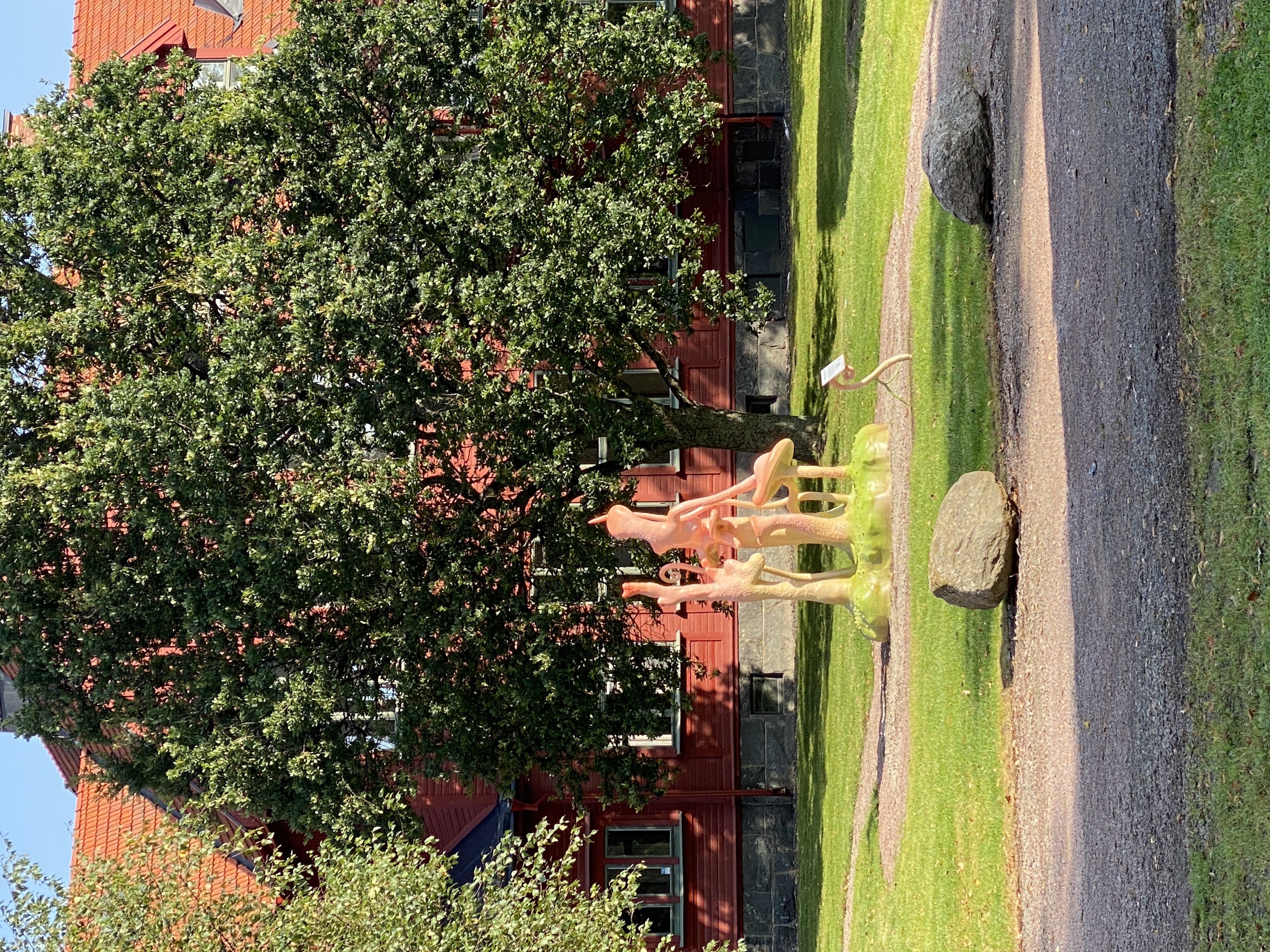
Mycelia Skloretia
YEAR: 2024 | MATERIAL: Sand-cast recycled aluminum, wet lacquer
Location: Kviberg Park, Gothenburg
A public commission made up of two parts: Development and execution of a co-creative open idea process + a permanent artwork.
![]()
Mycelia Sklerotia is a tribute to biological ecosystems, wildness, and biodiversity, honoring the networks of relationships that are invisible to the naked eye yet sustain care and community. The work also reflects the importance of culture in society and of being a creative and sentient individual. Like magnified mycelial threads and fungal bodies, the sculpture rises from the ground—a kind of fossil of the future: puzzling, digital, and organically alive at the same time, frozen in motion.
Mycelia is a play on the words mycel / mycelium, the vegetative part of fungi consisting of a multi-branched network of thread-like hyphae—the building blocks of the organism. Sklerotia is the plural of sklerotium, a hard, usually dark resting structure found in some fungi. Fungi are incredibly fascinating organisms that existed on Earth long before humans. They are highly adaptable life forms, neither plants nor animals, and will likely outlive the human species by far.
Fungi as a species have existed on our planet long before humans; fossils of fungi dating back 1.2 billion years have been found. Yet there is still much to explore about this group of organisms. Fungi are everywhere—in our bodies, our homes, our food, everywhere! Fungi are a highly adaptable group; they are both decomposers and builders. Today, for example, we know that fungi can remediate contaminated soil without the need to move large amounts of earth. They learn to break down oil and other organic compounds, which are converted into harmless biomass. It is likely that fungi, as a species, will even outlive humans. Here stands this monument, pointing toward the future, yet rooted in the present.
In terms of form, I wanted it to play with shapes—fungi, morphed, moving, and strange forms. I’ve sketched with cardboard, clay, and drawings; looked at fungi under a microscope; created role-playing scenarios; and explored the site’s various parts, including what nature was like before the barracks were built. I have also experimented with digital morphs, running my sketches through various computer filters. The goal was to create something that feels familiar, yet otherworldly and alien.
Half of the commission involved creating a participatory process, which led me to establish a kind of study circle open to those active and interested in Kviberg. I wanted to open up and share my artistic process. I designed and set up six idea labs with themes such as: inventory / spirit of place, the artistic process, explorations of the wondrous world of fungi, and participatory culture, including a specially written role-playing game.
Location: Kviberg Park, Gothenburg
A public commission made up of two parts: Development and execution of a co-creative open idea process + a permanent artwork.
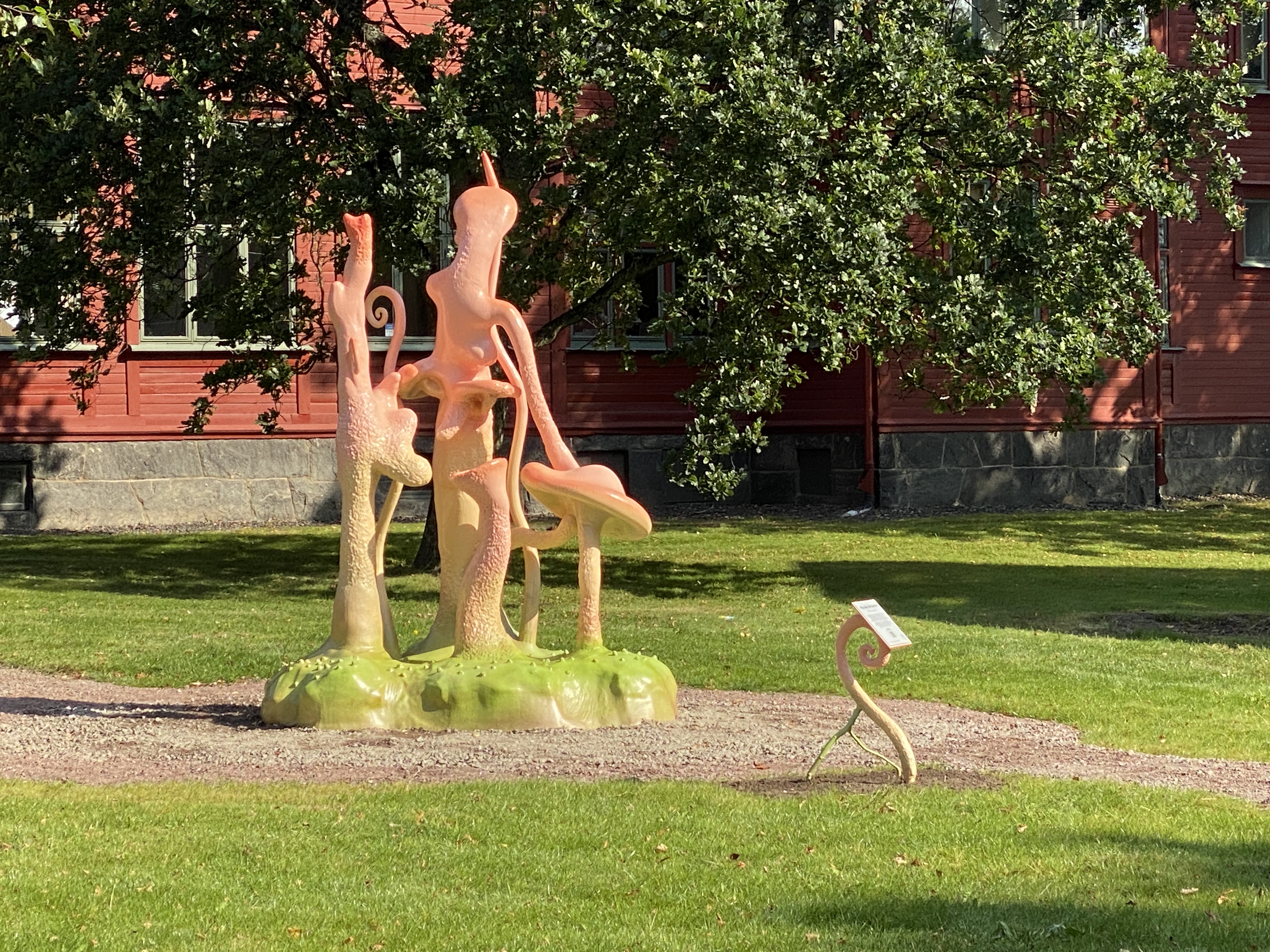
Mycelia Sklerotia is a tribute to biological ecosystems, wildness, and biodiversity, honoring the networks of relationships that are invisible to the naked eye yet sustain care and community. The work also reflects the importance of culture in society and of being a creative and sentient individual. Like magnified mycelial threads and fungal bodies, the sculpture rises from the ground—a kind of fossil of the future: puzzling, digital, and organically alive at the same time, frozen in motion.
Mycelia is a play on the words mycel / mycelium, the vegetative part of fungi consisting of a multi-branched network of thread-like hyphae—the building blocks of the organism. Sklerotia is the plural of sklerotium, a hard, usually dark resting structure found in some fungi. Fungi are incredibly fascinating organisms that existed on Earth long before humans. They are highly adaptable life forms, neither plants nor animals, and will likely outlive the human species by far.
Fungi as a species have existed on our planet long before humans; fossils of fungi dating back 1.2 billion years have been found. Yet there is still much to explore about this group of organisms. Fungi are everywhere—in our bodies, our homes, our food, everywhere! Fungi are a highly adaptable group; they are both decomposers and builders. Today, for example, we know that fungi can remediate contaminated soil without the need to move large amounts of earth. They learn to break down oil and other organic compounds, which are converted into harmless biomass. It is likely that fungi, as a species, will even outlive humans. Here stands this monument, pointing toward the future, yet rooted in the present.
In terms of form, I wanted it to play with shapes—fungi, morphed, moving, and strange forms. I’ve sketched with cardboard, clay, and drawings; looked at fungi under a microscope; created role-playing scenarios; and explored the site’s various parts, including what nature was like before the barracks were built. I have also experimented with digital morphs, running my sketches through various computer filters. The goal was to create something that feels familiar, yet otherworldly and alien.
Half of the commission involved creating a participatory process, which led me to establish a kind of study circle open to those active and interested in Kviberg. I wanted to open up and share my artistic process. I designed and set up six idea labs with themes such as: inventory / spirit of place, the artistic process, explorations of the wondrous world of fungi, and participatory culture, including a specially written role-playing game.
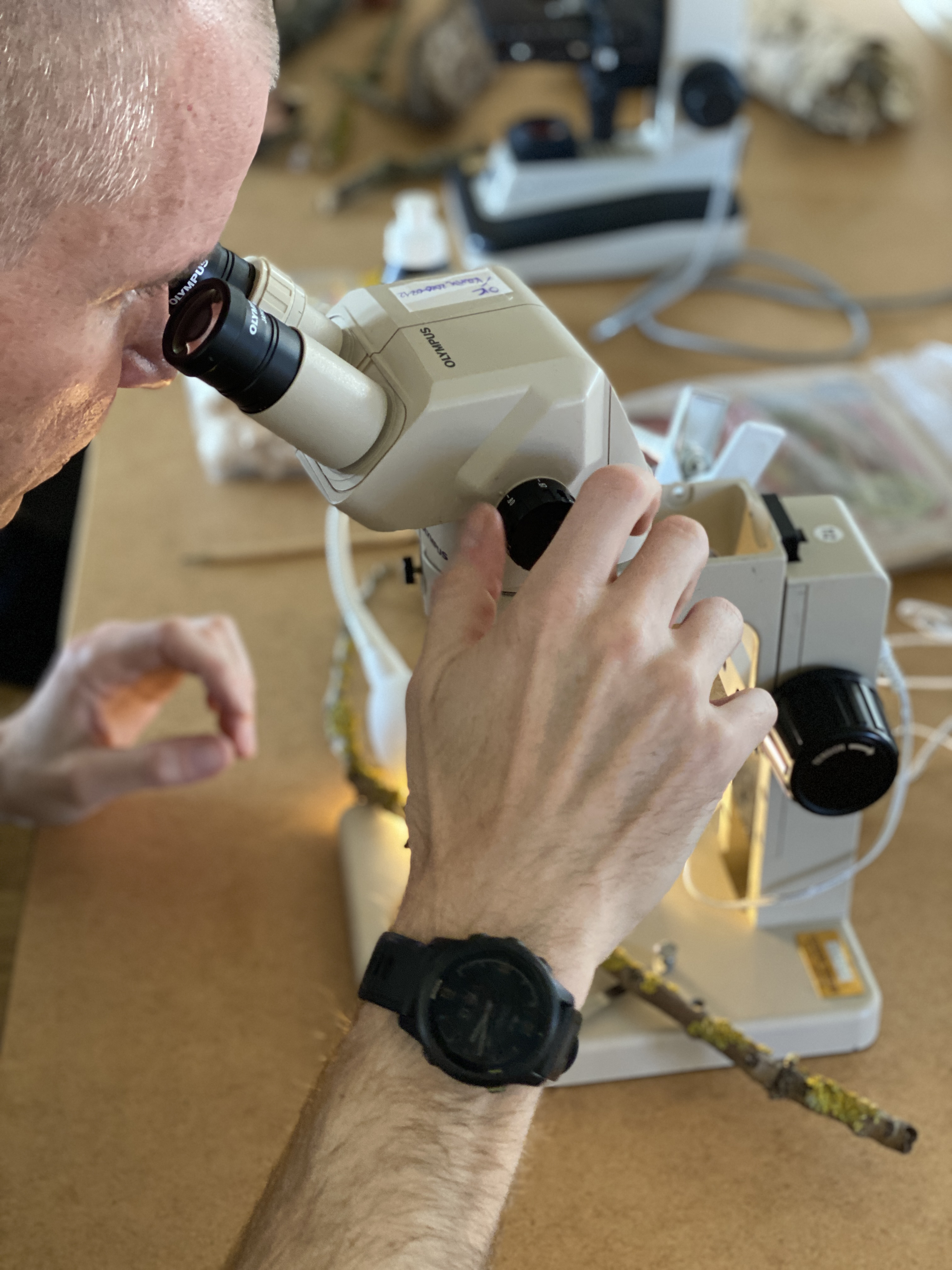
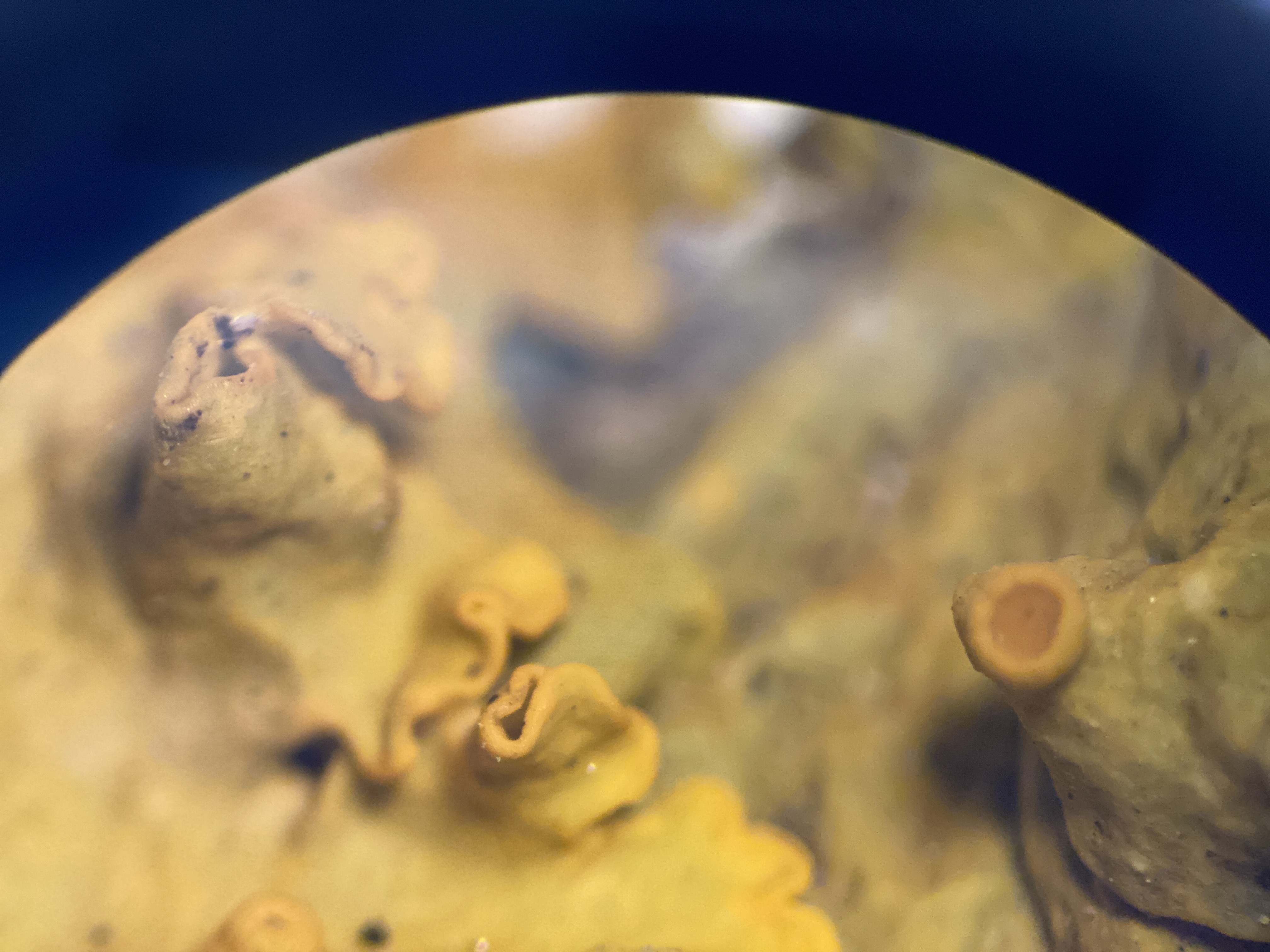
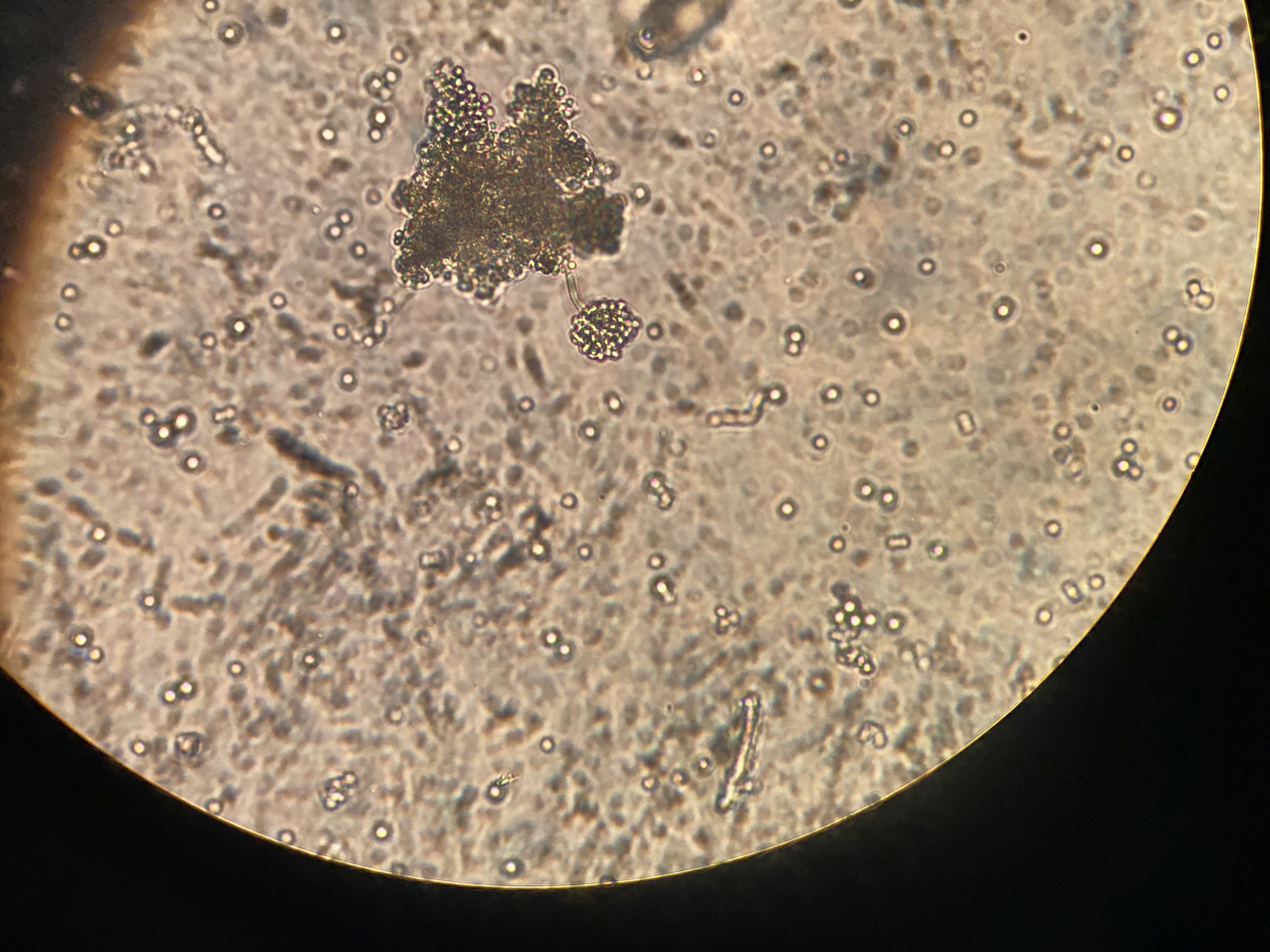


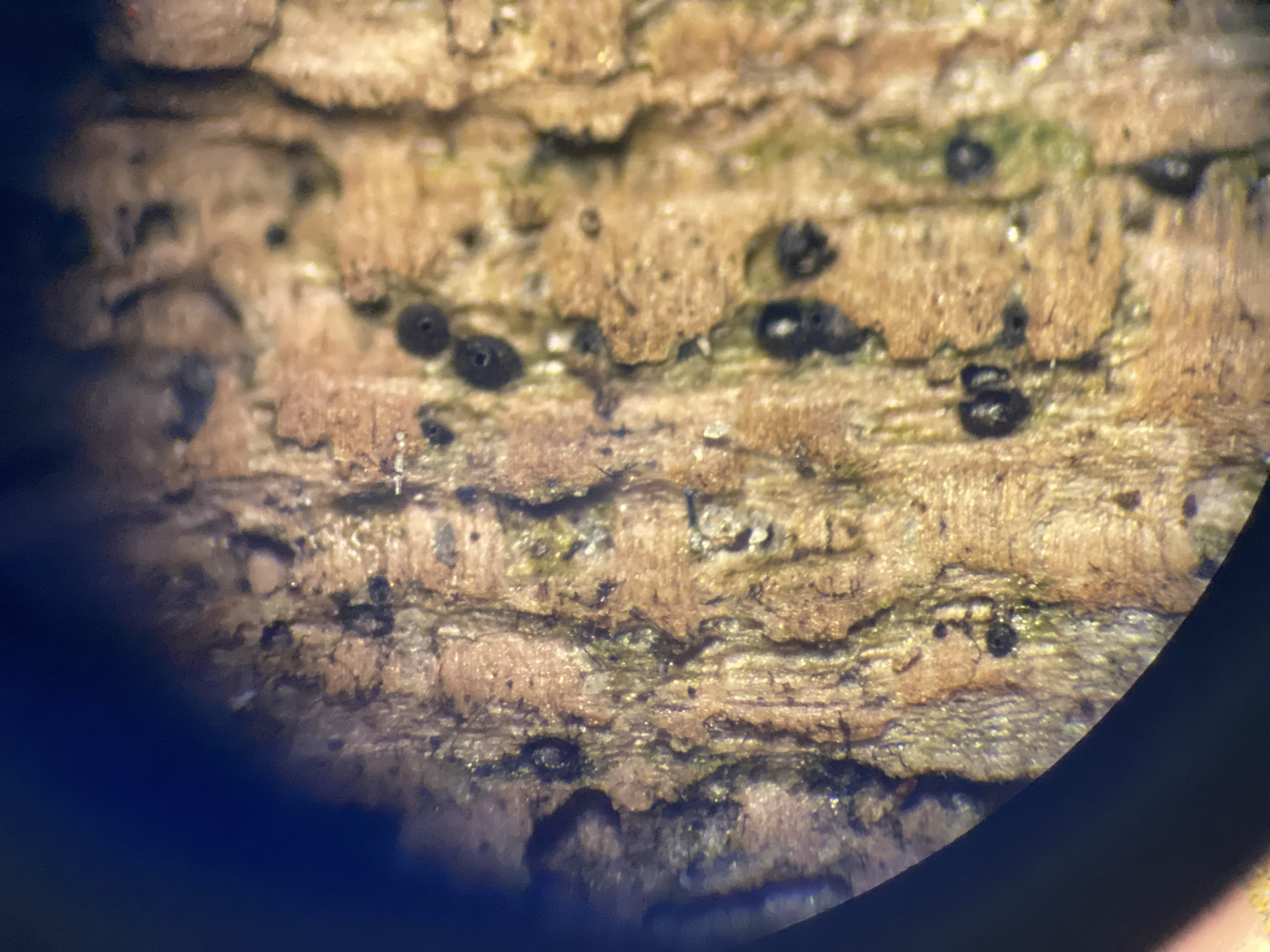
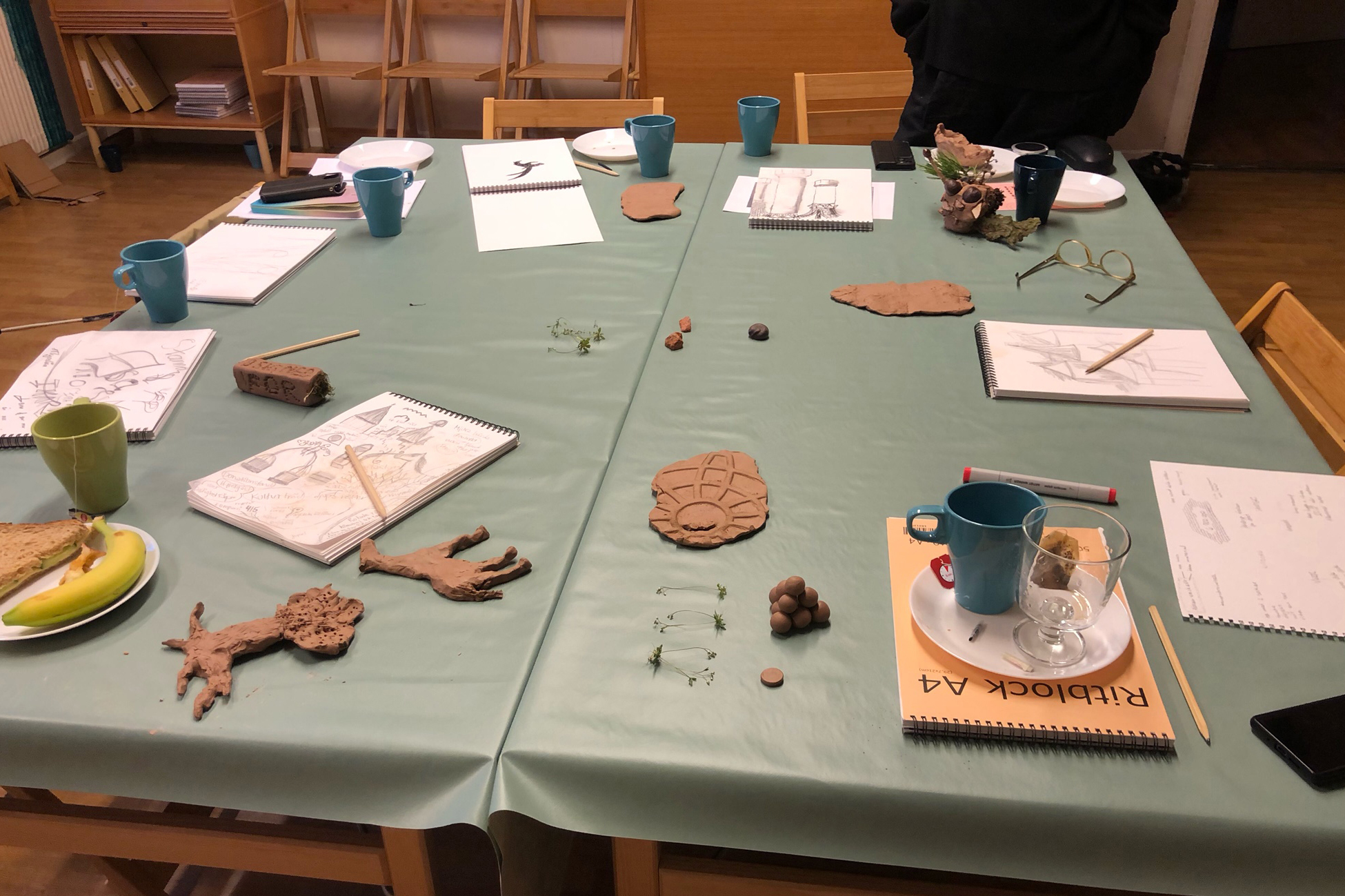
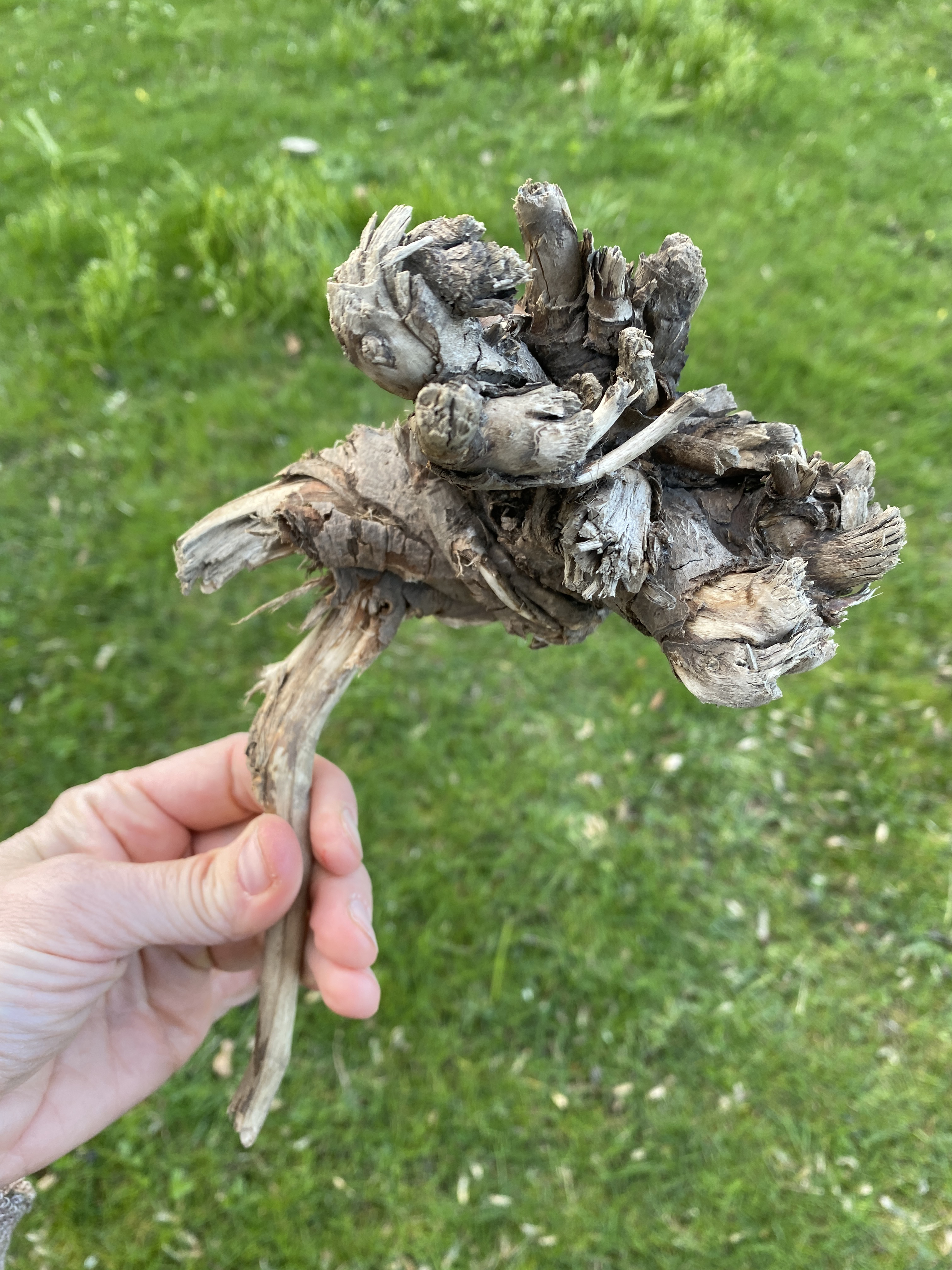
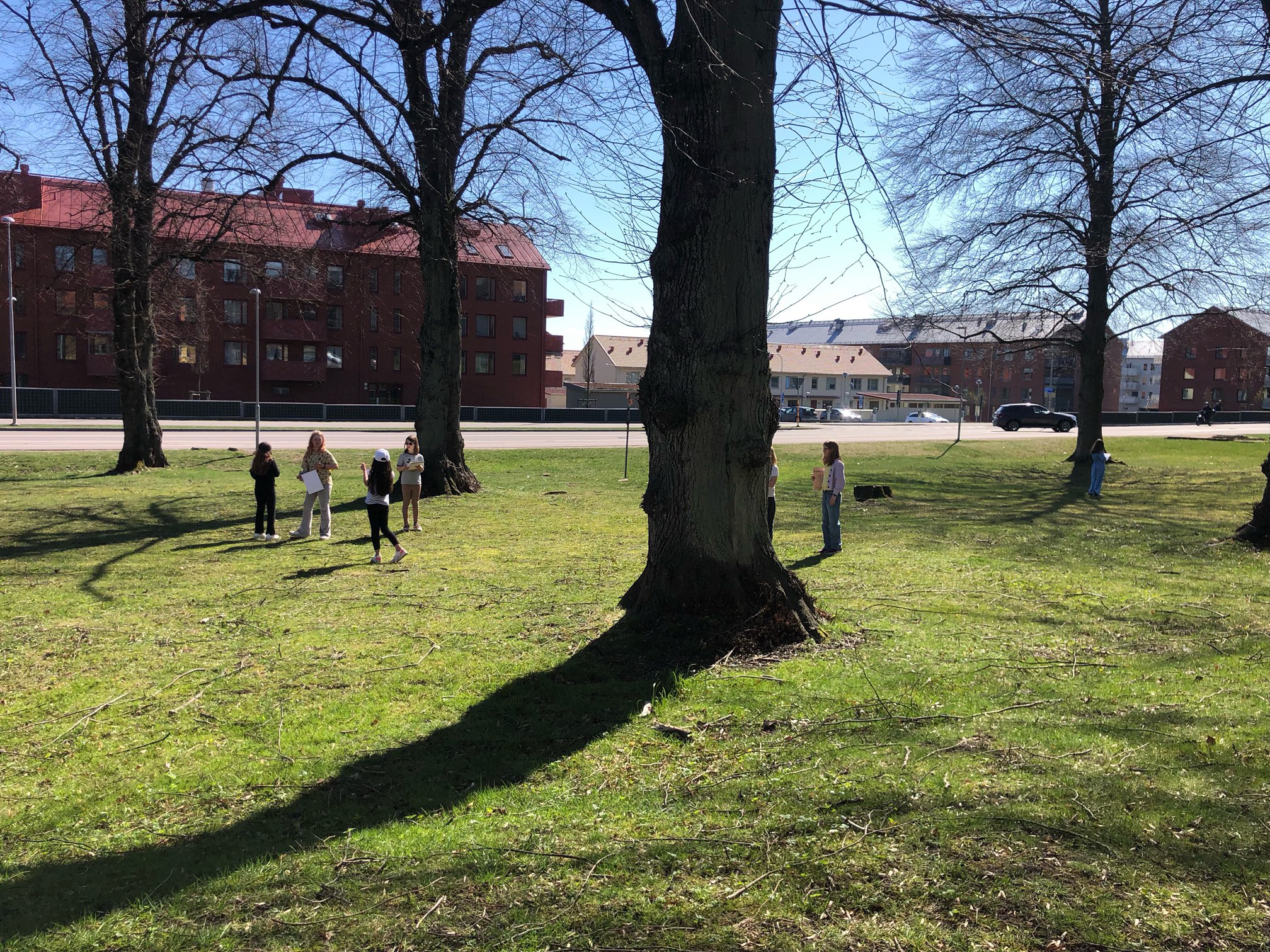

Text from the invitiation brochure we distributed:
“This is an opportunity to experience an artistic process from within. Together with invited guests, we explore the site through various perspectives and themes such as cycles, participatory culture and role-playing, networks, mycelium, folklore, allegory, nature–culture, and diversity. Playfully, we gather around what we want the artwork to do for and with the site in Kviberg Park. Through simple labs and workshops, we engage in practical exercises together with invited guests who contribute expertise on different themes. We test, write, walk, imagine, sketch, role-play, work with clay, have coffee, and converse. The aim is to foster encounters across boundaries while simultaneously establishing a meeting place, with the artwork as a marker.”
Participants in the labs included elementary school children from Kviberg School, as well as people active in the surrounding area.
Invited experts/guests in the labs were:
Boel Melin, architectural historian, Higab
Henrik Nilsson, mycologist and researcher, University of Gothenburg
Jenny Fornell Hjelm, editor, writing instructor, writer, Octotext
David Hjelm, computational linguist, writer, improviser, Octotext
Link to Göteborg konst